AI-Driven Next-Best-Action: The End of Static Sales Playbooks
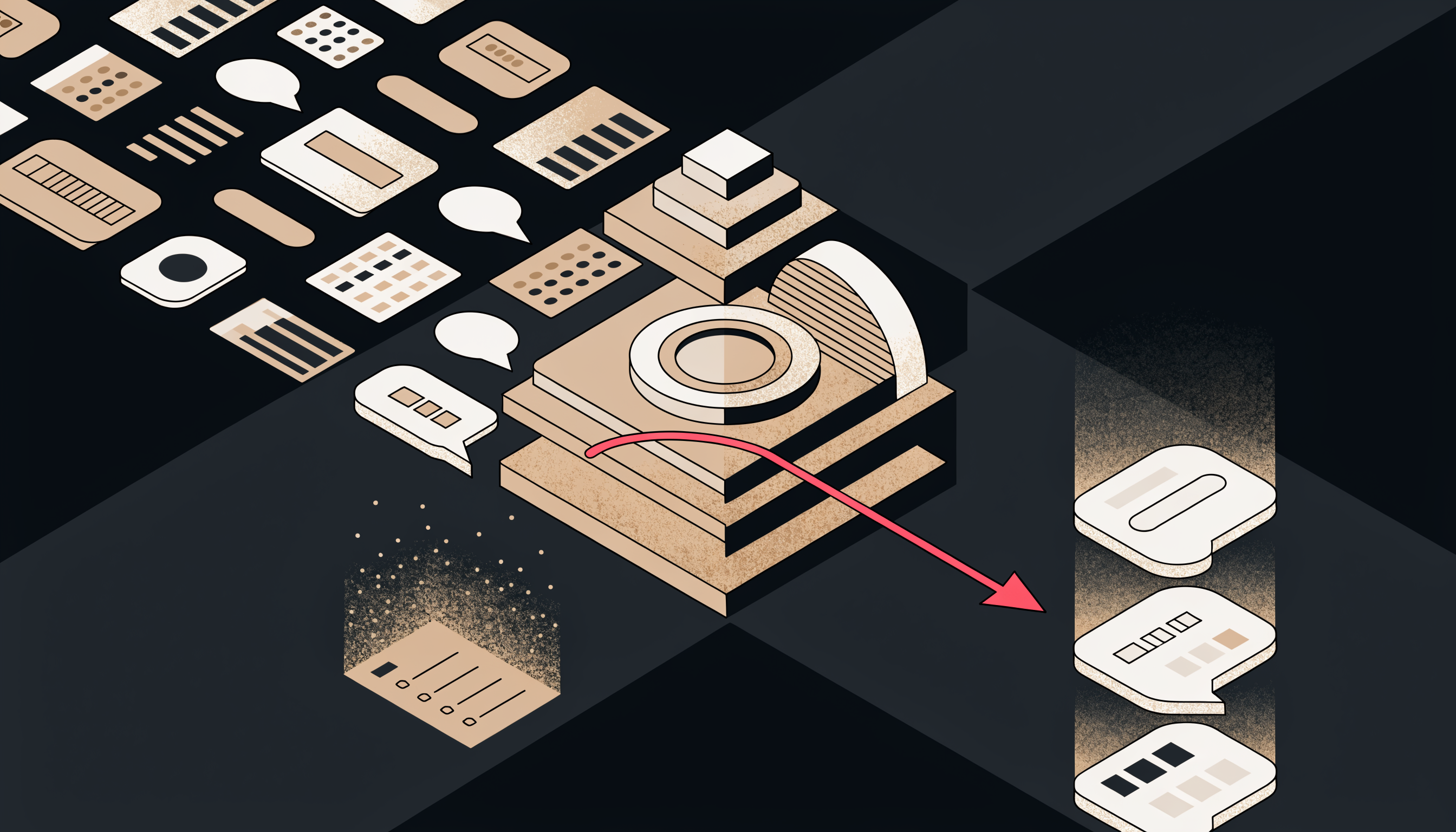
The average B2B sales playbook is a polished PDF that nobody opens during a live deal. That is not a motivation problem — it is a format problem. AI-driven next-best-action (NBA) systems replace the static document with a decision engine that reads CRM, engagement, and intent signals, then tells each seller the highest-value move for every account, inside the workflow where the deal is actually being worked. For revenue leaders, the shift is no longer theoretical: 2026 research shows a widening performance gap between teams that route guidance through AI and teams that still route it through binders.
Here is what the data says, why the static playbook model broke, and how to make the transition in one quarter.
Why Static Sales Playbooks Are Failing
The execution gap is now measured. The State of Sales Enablement 2026, a survey of 198 sales leaders, found that 89% of revenue teams have a defined sales process — but only 36% see reps follow it consistently. That 53-point gap was the largest single performance variable in the study, ahead of territory design, compensation, and methodology choice.
Delivery format explains most of the damage. Teams whose process guidance is embedded inside the CRM attain quota at 49%. Teams whose process lives in docs or wikis attain at 15% — same content, different location, more than double the outcome. Under quota pressure, "leave the deal, find the wiki, read the play, come back" loses every time.
Two more numbers frame the stakes:
- Teams that inspect deals against a defined process at the highest frequency hit quota at 6.3x the rate of teams that rarely do — yet only 3% use structured deal-review templates, while 58% rely on CRM dashboards and 26% on intuition.
- Per Salesforce's State of Sales 2026, sellers still spend roughly 60% of their time on non-selling work, and 94% of sales leaders say AI agents are essential to growth. The manual "find the play" step is exactly the kind of friction leadership wants engineered out.
The conclusion is uncomfortable but clear: documentation is solved; delivery and adherence are not. Static playbooks fail at the moment of selling because they were designed for the moment of training.
What AI-Driven Next-Best-Action Actually Means
An AI next-best-action engine scores every open lead and opportunity against historical outcomes and live signals — engagement recency, stakeholder coverage, intent spikes, deal velocity, product usage — and returns a ranked recommendation per record: call this stakeholder, send this proof point, bring in a solutions engineer, offer this incentive, or deliberately wait.
Three properties separate it from the playbook it replaces:
- Probability-ranked, not rule-stated. A playbook says "at stage two, send the deck." A model says "deals with this signal pattern closed far more often when a technical contact was engaged within five days."
- Delivered in the flow of work. Recommendations surface in the CRM record, the inbox, or the dialer — the surfaces where the 49% vs 15% gap is won.
- Continuously retrained. Every closed-won and closed-lost deal updates the model. A static playbook gets revised quarterly, if the team is disciplined.
McKinsey's research on gen AI in B2B sales frames next-best action as one of the highest-excitement use cases precisely where sellers face large option sets — tech services, durable equipment, insurance. Their case work is concrete: an industrial materials distributor that built an AI engine to score opportunities and personalize outreach generated more than $1 billion in new opportunities (a 10% pipeline increase) and more than doubled click-through rates in the first fiscal year. An enterprise equipment manufacturer running NBA algorithms for aftermarket sales grew pipeline by more than 20% of total revenue.
McKinsey also flags the next step: agentic AI does not just identify the action — it executes it, sending the outreach, evaluating the response, and booking the meeting. Recommendation first, execution under guardrails second.
The 2026 Performance Data Behind Next-Best-Action
The headline finding comes from Gartner. In a survey of 227 chief sales officers conducted August through September 2025, sales organizations that provide sellers with AI-enabled next best actions were 2.6x more likely to achieve commercial growth. A second multiplier matters just as much: organizations that prioritize upskilling sellers on AI were 2.4x more likely to achieve strong revenue growth. The tool is not the investment — the seller using the tool is.
Gartner's context for urgency: by 2027, the firm predicts 95% of sellers' research workflows will begin with AI, up from less than 20% in 2024. The organizations redesigning roles around AI-augmented workflows now are the ones the multiplier shows up for.
Read together with the enablement data, the picture is consistent: NBA is what deal inspection looks like when it runs continuously instead of weekly. The 6.3x inspection effect does not disappear — it gets automated.
Static Playbook vs. AI Next-Best-Action Engine
| Dimension | Static playbook | AI next-best-action |
|---|---|---|
| Trigger | Seller remembers to check | Signal fires automatically |
| Guidance | Generic by stage or segment | Specific to deal, contact, and moment |
| Location | Wiki, PDF, or LMS | Inside CRM, inbox, and dialer |
| Learning loop | Quarterly revisions | Every closed deal retrains the model |
| Coverage | Top deals get attention | Every record gets a recommendation |
| Measurement | Adoption surveys | Action-level acceptance and outcome |
The playbook does not die — it becomes the training layer and the source of the action vocabulary the engine chooses from. What dies is the assumption that a document can steer a live deal.
The Foundation: Data, Signals, and Decision Rights
NBA amplifies whatever data foundation it sits on. Three prerequisites before any model goes near sellers:
- Hygiene first. Duplicate records, stale contacts, and inconsistent stage definitions produce confidently wrong recommendations at scale. Our guide to CRM data hygiene on autopilot covers the dedupe-and-enrichment baseline this depends on.
- Scores are inputs, not the answer. A propensity model that ranks who to call is one signal. NBA engines combine scores with timing, channel, and message context — see how the two layers relate in predictive vs. rules-based lead scoring.
- Decision rights before autonomy. Define which actions the engine recommends, which it may auto-execute, and which always require human approval. The copilot-to-autopilot framework maps those thresholds by reversibility and stakes.
Note the compounding effect: the same signal base that powers NBA also powers AI pipeline forecasting. Teams that build one well get the second at a discount.
A 90-Day Rollout Plan
Days 0–30 — Scope one motion. Pick a single, measurable play: stalled-deal re-engagement, MQL routing, or expansion signals in the installed base. Baseline current conversion, velocity, and response-time metrics. Audit the data feeding that motion. Define a finite action vocabulary — 15 to 25 named actions the engine can recommend, each mapped to an owner and a channel.
Days 30–60 — Recommend, don't execute. Deploy recommendations inside the CRM alongside the existing motion. Track acceptance rate and — critically — override reasons, tagged by the rep. Run weekly structured deal reviews against the recommendations; this is the inspection habit the 6.3x data rewards, now machine-assisted.
Days 60–90 — Measure the cohort, promote carefully. Compare NBA-covered pipeline against a control group. Where acceptance is high and outcomes beat baseline, promote that action to bounded auto-execution with ceilings on volume and spend. Name one owner — typically RevOps — accountable for model drift, override patterns, and the monthly action-vocabulary review.
The KPIs That Prove It's Working
- Recommendation acceptance rate — target above 50% by month three; below that, the guidance is wrong or the workflow placement is.
- Override-win rate — when reps ignore the recommendation and win anyway, it signals a model gap worth investigating, not resisting.
- Time-to-next-action — minutes from signal to action taken, replacing "days until someone noticed."
- Stage-conversion lift — covered pipeline vs. control, by stage.
- Never-touched rate — share of open records with no action in seven days; this is where pipeline quietly dies today.
- Quota attainment of covered teams — benchmark against the 49%-vs-15% embedded-guidance gap.
FAQ: AI Next-Best-Action in B2B Sales
What is AI next-best-action in sales?
It is a decision engine that reads CRM, engagement, and intent data to recommend the single highest-probability move for each lead or opportunity — delivered inside the seller's workflow instead of a document. Recommendations rank actions by what historically moved similar deals, and the model retrains on every new outcome.
How is next-best-action different from lead scoring?
Scoring ranks who to prioritize. Next-best-action recommends what to do with them — channel, timing, message angle, and stakeholder — for every record, not just the top of the list. Scores are one input into the engine; the output is an action, not a number.
What data do we need before deploying an NBA engine?
Twelve to 24 months of CRM history with real close dates and consistent stage definitions, activity logging that captures touches per deal, and a deduplicated contact base. Without that floor, models learn from noise and sellers learn to ignore the recommendations — the fastest way to kill the program.
Will reps actually follow AI recommendations?
Only if the delivery is in the flow of work and the early wins are visible. The enablement research is blunt: guidance embedded in the CRM correlates with 49% quota attainment versus 15% for guidance in docs. Pair the rollout with upskilling — Gartner's 2.4x multiplier is attached to training, not software procurement — and track acceptance weekly so drift gets caught early.
The Bottom Line
Static playbooks assumed sellers would leave the deal to go find guidance. The 2026 data says they don't — and that teams delivering guidance inside the deal, ranked by live signals, grow materially faster. The playbook's content still matters; its format is what failed.
Optimal AI + Marketing builds next-best-action systems on top of your existing CRM — from the data audit and action vocabulary to the recommendation layer and the governance that keeps it trusted. Explore more playbooks on the blog, or book an AI consultation to scope your 90-day rollout.
Ready to turn AI into measurable growth?
Let's discuss how we can build smarter systems and stronger campaigns for your team.
Book a Discovery Call