Is Google Ads Worth It for a Small Business? The 2026 Break-Even Math
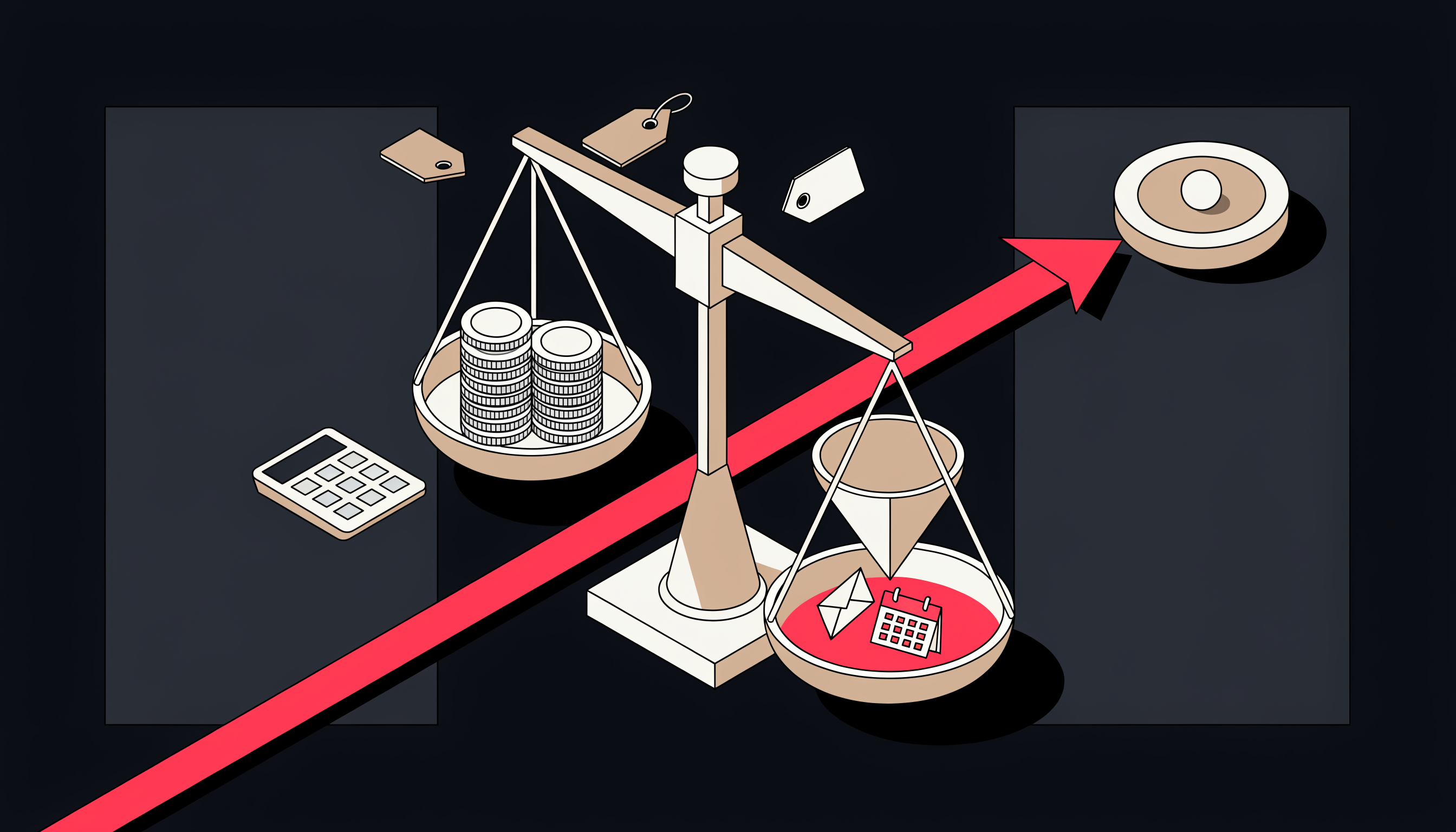
Is Google Ads worth it for a small business? The honest answer: it depends on three numbers you already know — or can estimate in 20 minutes. Not on what a rep tells you, not on a case study from a company ten times your size.
Here's the reality of the auction you're entering. According to WordStream's 2025 Google Ads Benchmarks (16,000+ campaigns, April 2024–March 2025), the average click now costs $5.26, the average lead costs $70.11, and the average conversion rate is 7.52%. CPCs rose for 87% of industries. This is not a cheap channel — but "expensive" and "unprofitable" are different things.
This guide gives you the break-even math, the industry benchmarks, and the kill criteria — so you decide with numbers, not hope.
The Only Formula That Matters
Strip away the dashboards and Google Ads reduces to one question: is a customer worth more than it costs to acquire them?
Your break-even cost per lead is:
Average job value × gross margin × lead-to-customer close rate
A real example. Say you run an HVAC company: average ticket $650, gross margin 50%, and you close 1 in 4 leads. Your break-even CPL is $650 × 0.50 × 0.25 = $81.25. WordStream's benchmark for Home & Home Improvement is a $90.92 CPL — slightly above your break-even before you optimize, and comfortably profitable once a decent campaign beats the average.
Now a lawyer: average case value $5,000, margin 60%, close rate 20% → break-even CPL of $600. The legal industry's average CPL is $131.63. Painful click costs ($8.58 average CPC), massive headroom. Meanwhile, a $40 average ticket changes everything: the math only works with repeat purchases or subscriptions lifting lifetime value.
Run your own numbers before you read another word. If your break-even CPL is below your industry's average CPL, Google Ads is a uphill fight. If it's 2–5x above, you have a business the channel can scale.
What a Click Actually Buys in 2026
Benchmarks worth anchoring to, all from the WordStream 2025 dataset:
- Average CPC: $5.26 — from $1.60 (Arts & Entertainment) to $8.58 (Attorneys & Legal Services).
- Average CPL: $70.11 — from $28.50 (Automotive Repair) to $131.63 (Legal). CPL rose only ~5% year over year, after a brutal 25% jump the year before.
- Average conversion rate: 7.52% — and it improved for 65% of industries, meaning well-run campaigns are converting better even as clicks cost more.
One more 2026 wrinkle: AI Overviews now sit above ads on many searches. Seer Interactive's 2026 CTR study (53 brands, 5.47M queries, January 2025–February 2026) found paid CTR holds at 16.21% when an AI Overview appears versus 21.85% when it doesn't. Translation: high-funnel informational queries are leaking to AI answers; bottom-funnel "near me" and service queries — where local businesses live — still convert. We covered the organic side of this shift in our zero-click search strategy playbook.
When Google Ads Is Worth It — and When It Isn't
It's usually worth it when:
- Your customers search with intent to buy ("emergency plumber near me," "divorce lawyer free consultation").
- Your break-even CPL has at least 2x headroom over your industry's benchmark.
- You can answer or return inquiries fast — paid leads decay in minutes. Our speed-to-lead research shows contact odds collapse after the first five minutes.
- You have (or will build) a page that converts — ads amplify your website; they don't fix it.
It usually isn't when:
- Nobody searches for what you sell (new category, impulse buy) — that's social's job.
- Your average ticket is small with no repeat business.
- You can't track conversions. Spending without call tracking and form tracking is gambling, not marketing.
The 20-Minute Break-Even Worksheet
| Step | Your number | Example (HVAC) |
|---|---|---|
| 1. Average job / first-purchase value | $___ | $650 |
| 2. × Gross margin | ___% | 50% |
| 3. × Lead-to-customer close rate | ___% | 25% |
| 4. = Break-even CPL | $___ | $81.25 |
| 5. Industry benchmark CPL | $___ | $90.92 |
| 6. Headroom (4 ÷ 5) | ___x | 0.9x → optimize or pass |
Then layer lifetime value: if customers come back, your true break-even is higher than step 4 — a dentist acquiring a $300 new-patient visit may really be buying a $3,000 relationship.
What a Realistic Test Budget Looks Like
You need roughly 30 conversions for Google's smart bidding to stabilize — and for you to know anything. At a 7.52% conversion rate, that's ~400 clicks. At $5.26 a click, call it $2,000–$2,500 in ad spend over 60 days for a real test in most local categories (less in cheap-click trades, more in legal).
On management: doing it yourself is viable with AI-assisted campaign tools if you'll spend 2–3 hours a week learning. Hiring help runs $100–$149/hour for PPC specialists per Clutch's PPC pricing data — for a $2,000/month account, a percentage-of-spend fee often costs more than it saves. If you're weighing DIY vs. agency vs. AI, our comparison of the three models breaks down the real costs, and our agency pricing guide covers what retainers, projects, and performance deals actually run.
The Kill Criteria
Set these before launch, in writing:
- Day 30: CPL within 30% of break-even, tracking verified (every call and form counted).
- Day 60: CPL at or below break-even on at least one campaign or ad group.
- Day 90: profitable at the account level, or pause and fix the offer, page, or close rate — then retest.
Most failed Google Ads accounts didn't fail because the channel doesn't work. They failed because nobody ran step 4 of the worksheet first, and nobody set a kill date.
FAQ
How much should a small business spend on Google Ads per month?
Enough to generate ~30 conversions: typically $1,500–$3,000/month in ad spend for local services, plus management if you hire it. Below that, you're buying data too slowly to optimize.
Is Google Ads worth it with a small budget like $500/month?
Rarely as a test — at $5.26 average CPC that's ~95 clicks and roughly 7 leads. It can work in low-CPC niches with high close rates, but most owners are better off putting $500 into Google Business Profile and reviews first, then testing ads at $2,000+.
What is a good ROI for Google Ads?
Break-even first; then a healthy target is $3–$5 of gross profit per $1 of ad spend (blended ROAS 3:1–5:1). Anything above break-even CPL compounded by repeat business is a win.
How long does it take for Google Ads to work?
Traffic starts day one; trustworthy signal takes 30–60 days; smart bidding typically stabilizes after ~30 conversions. Judge at day 90, not day 9.
Are Google Ads better than SEO for small businesses?
They answer different questions. Ads buy intent today at a known cost per lead; SEO compounds over 6–12 months. Use the break-even math for ads, and treat SEO as the asset that lowers your blended acquisition cost over time.
Want the math run for your specific market before you spend? Book an AI Consultation — we'll model your break-even CPL, audit your tracking, and tell you honestly whether ads belong in your mix. More playbooks at the Optimal blog.
Ready to turn AI into measurable growth?
Let's discuss how we can build smarter systems and stronger campaigns for your team.
Book a Discovery Call