How Long Does SEO Take to Work for a Small Business?
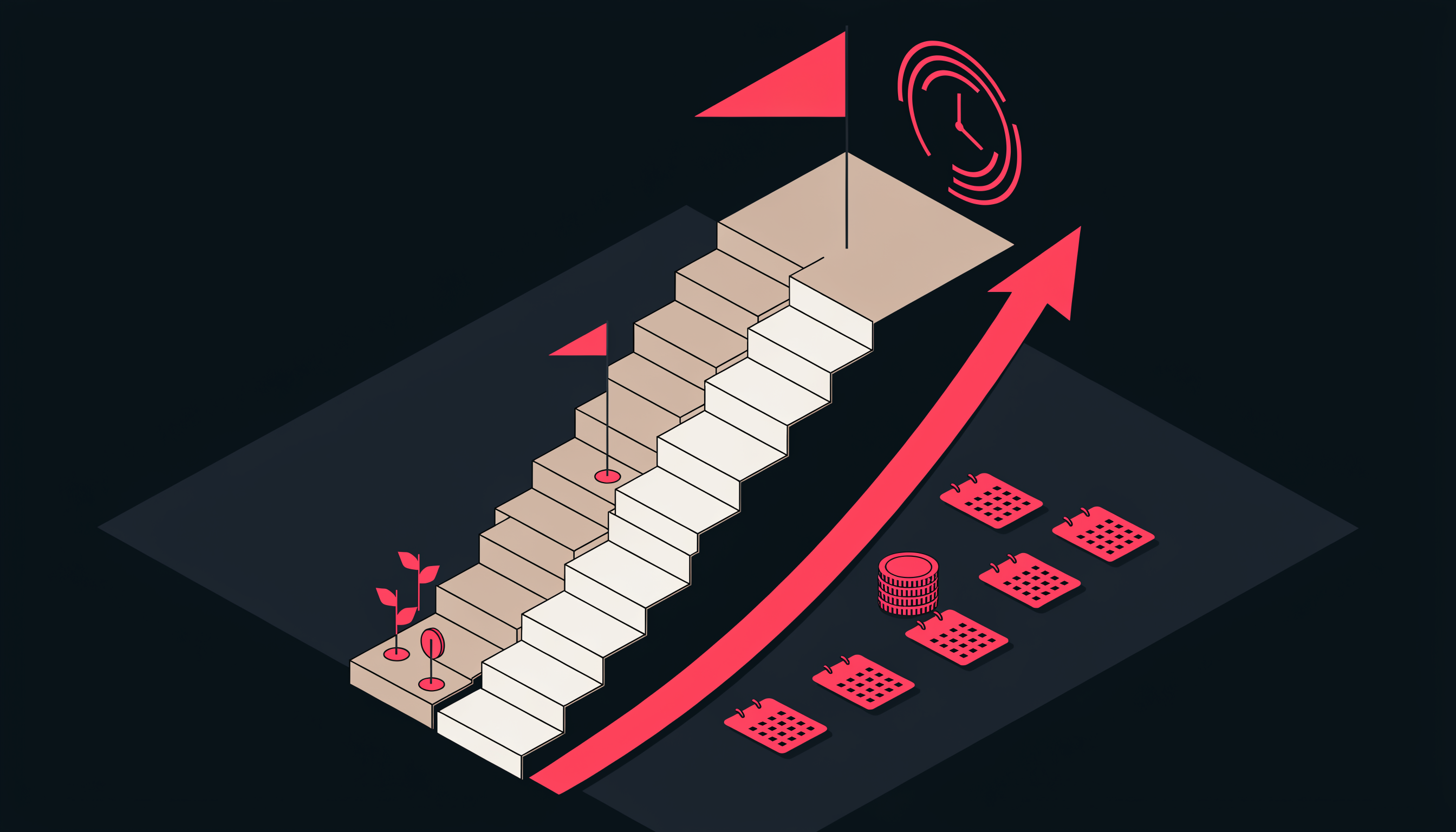
How long does SEO take to work for a small business? The short, honest answer: 3 to 6 months before you see meaningful results, and 12 months or more before SEO becomes a dependable lead engine. That's not an agency hedging — it's what the data shows. When Ahrefs polled 3,680 SEO professionals, the most common answer for how long SEO takes to show results was three to six months. And Google's own SEO Starter Guide says some changes take effect in hours, others take several months, and you should generally wait a few weeks to assess whether your work is paying off.
This post gives you the real timeline, the data behind it, the factors that move you faster or slower, and a month-by-month plan that fits an owner's schedule. No "SEO is a marathon" fluff — just numbers and what to do with them.
The Honest Answer: What the Data Says
Three data points frame the realistic timeline for a small business website:
- 3–6 months to show results. That's the consensus of 3,680 SEO practitioners polled by Ahrefs on LinkedIn and X. Notice the wording: "show results" — first movement, early rankings, early traffic. Not "dominate your market."
- Only 1.74% of newly published pages reach Google's top 10 within a year. In Ahrefs' study of one million random URLs, 98.26% of new pages did not crack the top 10 within 12 months — down from 5.7% in 2017. New pages face real headwinds.
- 72.9% of pages in Google's top 10 are more than 3 years old, and the average #1 ranking page is about 5 years old (up from 2 years in 2017). Google leans on proven pages.
Read together: SEO is slower than ads, slower than your Google Business Profile, and unforgiving of quitting at month 4. But it's also the only channel that compounds — a page that ranks at month 9 can produce leads at near-zero marginal cost for years.
How Long Does SEO Take? A Month-by-Month Timeline
Here's what a realistic first year looks like for a local small business site that's starting from a decent (not broken) foundation:
| Phase | What happens | What you'll see |
|---|---|---|
| Months 1–2: Foundation | Technical fixes (indexing, speed, mobile), keyword mapping, Google Business Profile, analytics and Search Console setup, first 2–4 core pages rebuilt. | Nothing in traffic. Impressions may tick up in Search Console. This is normal. |
| Months 3–4: First movement | Core service pages live, local pages optimized, first supporting content published, first reviews and citations accumulating. | Impressions rising, a few keywords entering positions 20–50, occasional page-one appearance for low-competition terms. |
| Months 5–6: Traction | Content cadence established, internal links built, Google Business Profile fully active, review velocity steady. | Multiple keywords in the top 10–20, measurable organic traffic, first organic leads or calls. |
| Months 7–12: Compounding | Content library grows, pages age and gain authority, local pack appearances stabilize. | Consistent top-10 rankings for your money terms, SEO becoming a real share of inbound leads. |
If you're at month 3 seeing "nothing," check Search Console before panicking: rising impressions with flat clicks means you're ranking but not yet high enough to get clicked. That's progress, not failure.
5 Factors That Decide Your Timeline
Two businesses can start SEO the same week and land a year apart. These are the variables that matter most:
1. Website age and history
Older domains with clean histories rank faster — Google has years of trust signals on them. A brand-new domain typically needs longer to earn the same positions, which is why the top-10 skews toward pages 3+ years old.
2. Competition in your market and niche
"Plumber in Boise" and "personal injury lawyer in Houston" are different universes. Narrow, specific targets (your service + your city + your specialty) can rank in weeks; broad head terms against national brands can take years. Pick battles you can win this year.
3. Content quality and cadence
One strong page per month beats ten thin ones. Pages that directly answer what customers ask — pricing, process, timelines, comparisons — earn rankings and AI citations faster than generic "welcome to our website" copy.
4. Your local foundation
For local businesses, your Google Business Profile, reviews, and citations move the needle faster than almost anything on your website. The map pack is the shortcut: it can produce calls in weeks while organic rankings mature. See our Google Business Profile optimization checklist for 2026 for the full setup.
5. Resources and consistency
Ahrefs' timeline analysis calls this out directly: more consistent time, effort, and budget accelerate results. Two focused hours a week for 12 months beats a big one-time "SEO project" followed by silence.
How to Speed Up SEO Without Getting Burned
You can't cheat the timeline, but you can stop wasting it:
- Fix indexing and speed first. If Google can't crawl your site or your pages load in 6 seconds on a phone, nothing else matters. Search Console's Page Indexing report is your first stop.
- Target low-competition, high-intent keywords. "Emergency water heater repair [your city]" converts better and ranks faster than "plumbing services."
- Build your Google Business Profile in parallel. It's the fastest SEO win available to a local business — categories, services, photos, posts, and a steady review engine.
- Publish answer-first content. Pages that open with a direct answer to a real customer question get cited by Google and AI search engines — and our post on getting your business recommended by ChatGPT shows how the same structure earns AI visibility.
- Earn reviews and local mentions. Reviews, local news mentions, and supplier/partner links are the authority signals a small site can realistically win.
- Refresh, don't abandon. Updating a page that's stuck on page 2 is often the fastest ranking gain available — cheaper than writing a new one.
SEO vs. Google Ads vs. Google Business Profile: The Time-to-Lead Math
Smart owners don't choose one channel — they sequence them:
| Channel | Time to first leads | Cost profile | Long-term behavior |
|---|---|---|---|
| Google Business Profile | 2–8 weeks | Free (your time) | Compounds with reviews; the local workhorse |
| Google Ads | Days | Pay per click, forever | Stops the day you stop paying |
| SEO (organic) | 3–6+ months | Front-loaded effort | Compounds; leads at near-zero marginal cost |
The playbook: run your GBP and a modest ads budget for immediate pipeline while SEO matures, then let organic take over the expensive keywords. We ran the full break-even math in Is Google Ads Worth It for a Small Business? — and if you're deciding who should do this work, see DIY vs. Agency vs. AI for the real cost comparison.
Frequently Asked Questions
Can SEO work in 30 days?
For technical fixes and Google Business Profile improvements, yes — you can see movement in weeks. For competitive organic rankings, no. Anyone promising page-one results in 30 days for a competitive term is selling you something Google explicitly warns about.
Why does SEO take so long?
Because Google ranks pages it trusts, and trust is built from evidence accumulated over time: content quality, links, reviews, user behavior, and consistency. The data bears it out — nearly three-quarters of top-10 pages are over 3 years old.
Should I stop SEO if I see nothing after 3 months?
Check leading indicators first: impressions, number of ranking keywords, and positions moving from 50 → 30 → 15. If those are rising, you're on track. If literally nothing has moved, the strategy — not the channel — needs review.
Is SEO worth it for a small local business?
Yes, if you can fund the 6–12 month runway. Organic and map-pack leads are typically the cheapest long-term source of new customers a local business can build. Pair it with faster channels while it matures.
Does AI search change the timeline?
It adds a second prize. The same answer-first, well-structured pages that rank in Google also get cited by ChatGPT, Perplexity, and Google's AI features — so every month of SEO work now builds visibility in two places at once.
The Bottom Line
SEO takes 3–6 months to show results and about a year to become a dependable lead engine. The businesses that win are the ones that start the clock now, run Google Business Profile and ads for short-term pipeline, and keep publishing while competitors quit at month 4. If you want a realistic timeline and budget built for your market, book an AI consultation — we'll map the fastest path from where your site is today to leads you can measure. Browse more playbooks on the Optimal blog.
Ready to turn AI into measurable growth?
Let's discuss how we can build smarter systems and stronger campaigns for your team.
Book a Discovery Call